Want to know; what FSSAI says for Delicious Summer Treat - Ice Cream?
FSSAI defines Ice cream as a frozen food, which is usually consumed as a snack or dessert. FSSAI has issued guidelines for FBOs involved in the manufacturing & sale of ice cream.
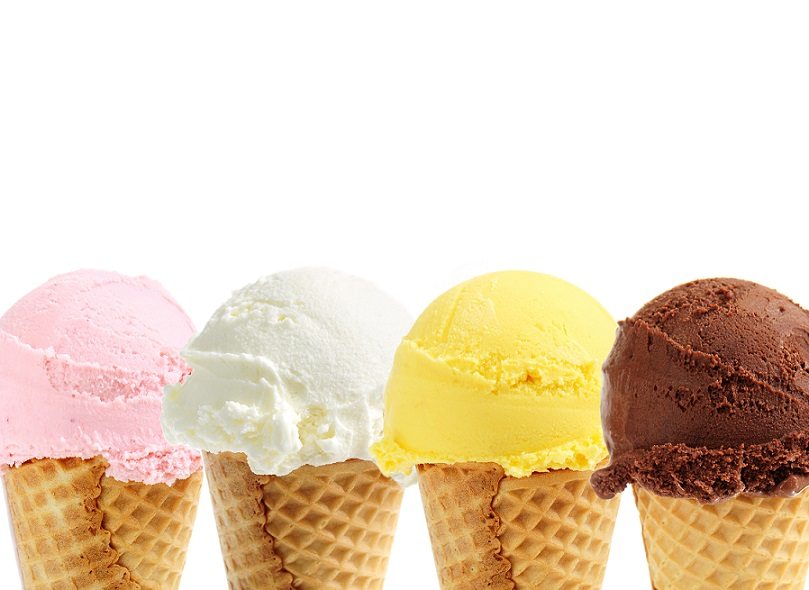
**Ice cream** is a great favorite among both children and adults, especially during the summer. While consuming ice cream provides a great source of enjoyment, you should appreciate the huge amount of work that goes into making your favorite gastronomic treat. This work is done largely by the food business operators (FBOs), in particular the manufacturers and the packaging & labeling experts, and we feel that this category of FBOs will benefit immensely from this article, by way of refreshing and updating their knowledge. Ice cream, as the name suggests, is a food that is frozen and creamy in texture. It can be eaten alone, or sometimes after a meal, as a dessert. It has many flavors, colors, consistencies, and also includes the famous Kulfi, the Indian version of the ice cream. It is usually made from milk or milk cream and other ingredients, including fruit pieces, chocolate, vanilla, artificial coloring, sugar or artificial sweeteners. As per the Food Safety and Standards Authority of India (FSSAI), besides the above criteria, ice cream may or may not contain eggs and egg products, coffee, cocoa, chocolate, condiments, spices, ginger and nuts. It can contain bakery products such as cake or cookies as a separate layer and/or coating. It may be frozen hard or frozen to a soft consistency; it should have a pleasant taste and smell free from off flavor and rancidity; and may contain permitted additives. As per FSSAI guidelines, the various types of ice cream should conform to certain requirements as given in Table 1, below: Table 1: Basic requirements of ice cream as per FSSAI recommendations
| Requirement | Regular Ice Cream | Medium Fat Ice Cream | Low Fat Ice Cream |
|---|---|---|---|
| Total solids | Not less than 36% | Not less than 30% | Not less than 26% |
| Wt/vol (g/l) | Not less than 525 | Not less than 475 | Not less than 475 |
| Milk fat | Not less than 10% | >2.5% but <10% | Not more than 2.5% |
| Milk protein | Not less than 3.5% | Not less than 3.5% | Not less than 3% |
It may be noted that dried ice cream mix in powdered form is also available, while can be reconstituted with water frozen to produce the ice cream. Additives in Ice Cream There are various types of additives that may be added in ice cream. But these have to be used with caution as they may be deleterious to health when added in excess. That is why the FSSAI has issued safety guidelines on the maximum levels that may be added.
- Artificial sweeteners: The artificial sweeteners that are permitted for using in ice cream include Aspartame (methyl ester) and Sucralose. These can be added at a maximum limit of 1000 ppm and 400 ppm respectively.
- Polyols: The polyols that are permitted in ice cream include Isomalt, Erythritol and Maltitol, which are to be added at a maximum level as per GMP requirements.
- Hydroxypropyl methyl cellulose: This is a chemical which falls under the category of emulsifying and stabilizing agents, and can be used at a maximum level of 1% in ice cream.
- Monosodium glutamate: This is a flavor enhancer. This is strictly prohibited in ice cream.
Details of some other additives with particular reference to ice cream are given below in Table 2. Table 2: List of food additives for use in ice cream as per FSSAI recommendations
| Additive | Maximum Limit |
|---|---|
| Stabilizer and Emulsifier | |
| Carrageenan | 10g/kg |
| Pectins | 10g/kg |
| Sodium carboxymethyl cellulose | 10g/kg |
| Agar | 10g/kg |
| Guar gum | 10g/kg |
| Xanthan gum | 10g/kg |
| Furcellaran | 10g/kg |
| Propylene glycol alginate | 10g/kg |
| Polyoxyethylene sorbitan tristearate | 10g/kg |
| Mono and di glycerides of fatty acids | 10g/kg |
| Methyl cellulose | 10g/kg |
| Thickener and Modifying Agent | |
| Microcrystalline cellulose | 10g/kg |
| Modified Starch | |
| Acid treated starch | 30g/kg (subject to declaration) |
| Flavors | |
| Natural flavors and natural flavoring substances/Nature identical flavoring substances/Artificial flavoring substances | GMP (subject to declaration) |
| Colors (Natural) | |
| Curcumin | 100 ppm |
| Riboflavin | 50 ppm |
| β-carotene | 100 ppm |
| Annatto extract | 100 ppm |
| β apo-8 carotenal | 100 ppm |
| Methyl ester of β apo-8 carotenoic acid | 100 ppm |
| Canthaxanthin | 100 ppm |
| Caramel colors (Plain) | GMP |
| Caramel colors (Ammonium sulphite process) | 3g/kg |
| Colors (Synthetic) | |
| Ponceau 4R | 100 ppm |
| Carmoisine | 100 ppm |
| Erythrosine | 100 ppm |
| Tartrazine | 100 ppm |
| Sunset yellow FCF | 100 ppm |
| Indigo carmine | 100 ppm |
| Brilliant blue FCF | 100 ppm |
| Fast green FCF | 100 ppm |
| Acidifying agents | |
| Malic acid (DL-) | GMP |
| L-(+Tartaric acid & Sodium/Potassium salts) | 1g/kg |
| Sodium hydrogen carbonate | GMP |
| Sodium/Potassium/Calcium orthophosphate | 2g/kg |
| Miscellaneous | |
| Glycerol | 50g/kg |
Microbiological Testing of Ice Cream Since ice cream is manufactured from milk and milk products, and water is an integral part of the manufacturing process, it is of the utmost importance that microbiological contamination does not occur at any stage of the ice cream making process. Some of the main microbiological parameters that must be maintained under stringent conditions have been highlighted below in Table 3. Table 3: Microbiological parameters for ice cream manufacture as per FSSAI recommendations
| Parameter | Maximum permissible level |
|---|---|
| Total plate count | 250,000/g |
| Coliform count | 100/g |
| E. coli | Absent/g |
| Salmonella | Absent/25g |
| Staphylococcus aureus (Coagulase positive) | Less than 10/g |
| Yeast and mold count | Less than 10/g |
| Listeria monocytogenes | Absent/g |
| Storage and transport | -18°C or lower |
| Sample size | 100g |
FSSAI Requirements
- Ice cream dealers: The FSSAI indicates that all ice cream dealers must have their name and address along with the name and address of the manufacturer, if any, legibly and conspicuously ‘displayed’ on the stall, vehicle or container as the case may be. This is a mandatory requirement.
- Package labeling: FSSAI also clearly states that every package of ice-cream, kulfi, kulfa and chocolate ice-cream containing starch shall have a declaration on a label as specified in regulation 2.7.1(2).
Therefore, from the foregoing discussion, it is evident that a huge number of stringent regulations pertaining to both food additives, microbiological parameters as well as packaging & labeling have to be met during the ice cream manufacturing process. So, next time you bite into a delicious “Cornetto”, spare a thought for the thousands of unseen FBOs who work day and night to bring you the best treat your taste-buds could possibly desire!