How FBOs can ensure food safety of dry fruits, nuts and seeds
Studies have indicated that consumer awaren
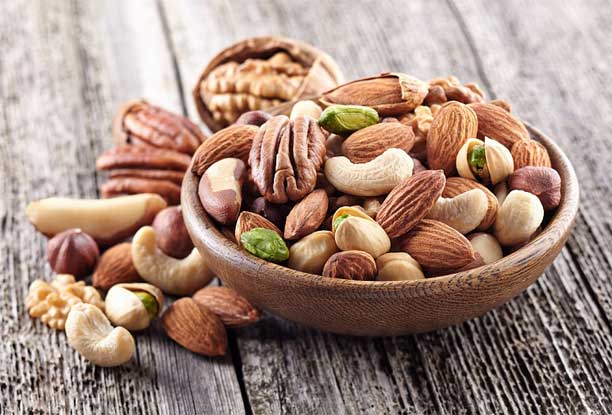
 Studies have indicated that consumer awareness about the health benefits of dried fruits has led to an increase in demand of dried fruits, nuts and seeds. Not only is there a growing demand of standalone food, but food manufacturers are enhancing the appeal of their premium food products by using dried fruits as ingredients. FBOs in the dried food sector have the responsibility to ensure that they have taken the right steps in their dried food processing plants to ensure that they provide healthy and wholesome dried fruits to consumers. Under the food category system that has been defined in the Food Safety and Standards (Food Products Standards and Food Additives) Amendment Regulations, 2016 ‘Dried fruit, nuts and seeds’ come under the category of processed foods. The FSSAI has defined dried fruits, nuts and seeds as products from which water is removed to prevent microbial growth which includes dried fruit leathers (fruit rolls) prepared by drying fruit purees. Such as cashew nut, almond, raisins, dried apple slices, figs, copra (dried coconut whole or cut), dried shredded or flaked coconut, prunes, dehydrated fruits etc. In the Food Safety and Standards (Food Products Standards and Food Additives) Regulations, 2011 dried fruits are described as “products obtained by drying sound, clean fruits and nuts of proper maturity. The product may be with or without stalks, shelled or unshelled, pitted or unpitted or pressed into blocks”. FBOs must ensure that dried fruits and nuts are
- free from mould, living / dead insects, insect fragments and rodent contamination
- free from extraneous matter like stalks, pieces of shells, pits, fibre, peel
- have uniform in colour, pleasant taste and flavour characteristic of the fruit/ nut
- free from off flavour, mustiness, rancidity and evidence of fermentation
- free from added colouring
- Stored appropriately to prevent contamination and growth of toxic microorganisms
- Free from blemished, discoloured and damaged nuts (caused by sunburn, scars, mechanical injury discolouration and by insects) must to be removed to prevent contamination
The product shall conform to the following requirements:— (i) Extraneous Vegetable matter (m/m) - Not more than 1.0 percent (ii) Damaged/ Discoloured units (m/m) - Not more than 2.0 percent (iii) Acidity of extracted fat expressed as oleic Acid - Not more than 1.25 percent Why FBOs need to ensure hygienic practices Contamination can occur at any stage during handling, processing, storage and distribution so it is imperative for FBOs to follow good hygiene practices in accordance with Schedule 4 of the FSS Act, 2006. The very fact that FBOs are operating as FSSAI licensed processors serves as an insurance of their intent to follow all FSSAI guidelines in running their dried food business. However, good hygiene practices entail FBOs ensure
- Raw fruits used for preparing dried fruits are free form chemicals, pesticides and enteric pathogens
- Hygiene and sanitation practices are maintained throughout the process
- Only potable water must be used during processing to prevent microbial contamination.
- Any desiccation during processing must be carried out with proper equipment which is sanitised after use
- Maintain specified thermal conditions so fruit is dehydrated correctly to maintain shelf life
Packaging and Labelling requirements to keep in mind Dried fruits are prone to contamination if they come in contact with moisture so proper packaging protocols need to be followed to ensure food safety.
- The use of food grade packaging is important as dried fruits come in direct contact with the packaging. Packaging must be safe and not cause chemical contamination. They must be able to keep moisture out of the packaging.
- FBOs also need to keep in mind that certain dried fruits and nuts especially peanuts can cause allergic reactions. Therefore, it is important to mention all the contents in a packet that contains mixed dried fruit.
Safety and Standards (Packaging and Labelling) Regulations, 2011 have defined what must be displayed on labels
- Name of the product
- Nature of the foods contents
- Mention any additives or preservatives used
- The nutritional value of the food content
- The “use-by date” or “recommended last consumption date” or “expiry date”
- The FSSAI logo and licence number
- The price of the food product
Safety limits of insecticides in dry fruits and nuts Raw fruits and nuts are cultivated for human consumption and so it is possible that they are subject to treatment by insecticides. Dried foods must be regularly tested for chemical and microbial contamination in an NABL certified laboratory. The FSSAI has fixed the upper tolerance limit of a number of insecticides with relevance to dry fruits and nuts. Upper limits for insecticides in dry fruits and nuts
Name of Insecticide
Food item
Tolerance limit (mg/kg, ppm)
Inorganic bromide (expressed as total bromide
dry fruit
30.0
Malathion
Dry fruit
8.0
Chlorobenzilate
Dry fruit almonds walnuts
0.2 (shell free basis)
Ethion
Dry fruit
0.1 (shell free basis)
Carbendazim
Dry fruit
0.10
Benomyl
Dry fruit
0.10
The FSSAI has already notified that the Food Safety and Standards (Food Products Standards and Food Additives) Amendment Regulations, 2016 is now operationalized. The FSSAI has also defined the food additives that can be used in dried fruits. Use of Food Additives in Dried Food, Nuts and Seeds
Food category Name
Food additive
INS No.
Recommended Maximum level
Note
Dried fruits, nuts and seeds
ASCORBYL ESTERS
80 mg/kg
10
BENZOATES
800 mg/kg
13
ETHYLENE DIAMINE TERTA
265 mg/kg
21
ACETATES (EDTA)
Diacetyltartaric and fatty acid esters of glycerol
472e
10,000 mg/kg
HYDROXYBEN ZOATES, PARA
800 mg/kg
27
Lauric arginate ethyl ester
243
200 mg/kg
Mineral oil, high Viscosity
905d
5,000 mg/kg
Mineral oil, medium viscosity, class I
905e
5,000 mg/kg
Calcium phosphate
341(i)
20,000 mg/kg
Magnesium phosphate
341(ii)
20,000 mg/kg
SORBATES
500 mg/kg
42
SULFITES
1,000 mg/kg
44,135,218
Tartaric acid, L (+)
334
GMP
The dry fruits has been in use dates back to 4,000 B.C. in Mesopotamia which is now modern-day Iraq, Iran, Kuwait, Syria and Turkey. From there the technique of drying fruit for use on long voyages and travels spread to the rest of the world. The very fact that dried fruits have an appealing taste, are highly nutritious and can be stored for a long time is the reason for their commercial production. The dried fruit market in India is not a new one but it is only recently that the dried fruit, nuts and seed industry has been growing swiftly. According to market reports the Indian dried fruit industry is likely to grow to Rs.30, 000 crore by 2020. Therefore the dried food importers, processors and marketers must be well prepared to handle the anticipated growth.